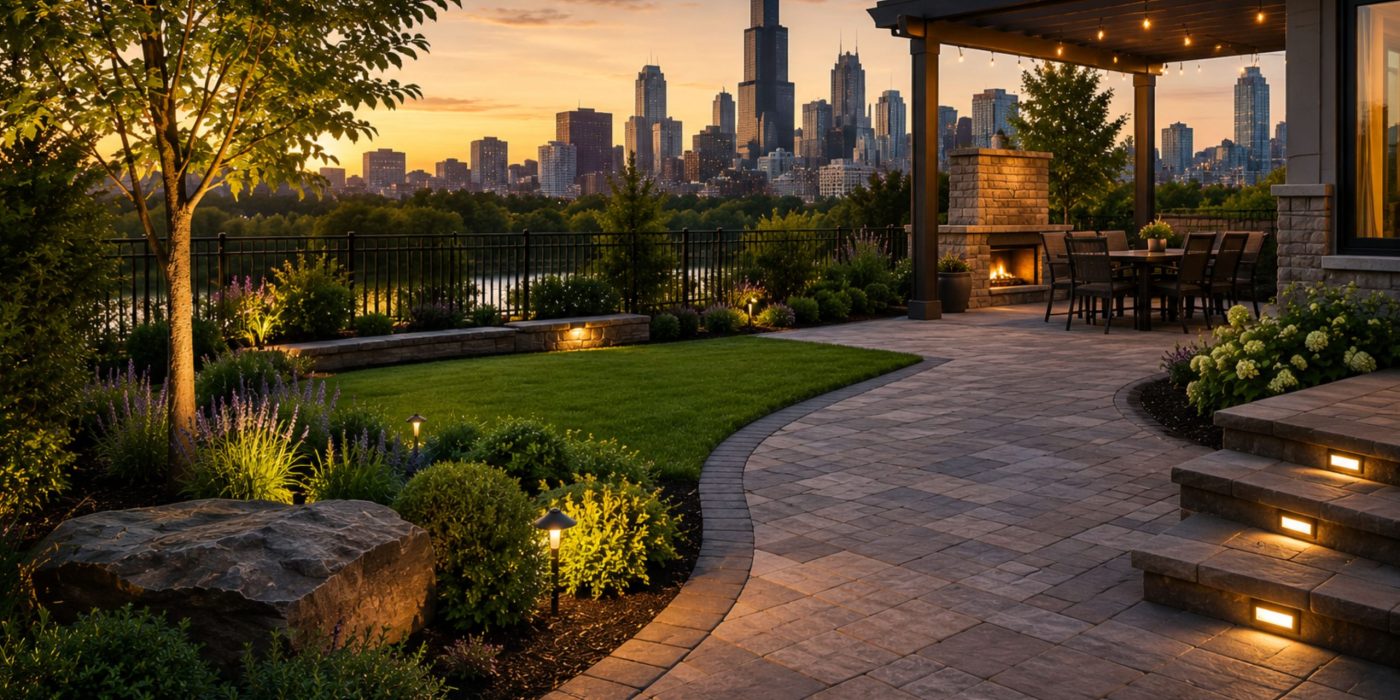
A brick paver patio isn’t a weekend DIY job dressed up in nicer materials. It’s a structural system that has to survive Chicago’s freeze-thaw cycles, drainage stress, and years of foot or vehicle traffic without heaving, cracking, or sinking. That’s why picking among landscaping contractors on price alone is one of the most expensive mistakes a homeowner or property manager can make. Chicagoland’s clay-heavy soil is unforgiving of shortcuts. We’ve torn out more than a few patios that looked fine on install day and fell apart by the second winter, because the base was never compacted correctly. Green Day Pro Landscaping installs hardscapes using ICPI-informed base preparation, commercial-grade compaction equipment, and a process that accounts for our region’s soil and climate, the kind of groundwork you don’t see, but absolutely feel five years later.
Why This Actually Matters
Hardscape failure almost never comes down to bad materials. It’s the installation. Sunken pavers, gapping joints, cracked mortar lines, trace any of these back far enough and you’ll usually find shallow excavation, skipped geotextile fabric, or compaction that got rushed to save a day of labor. None of that shows up at the walkthrough. It shows up eighteen months later.
For homeowners, that patio or driveway is a real chunk of your property’s value and your yard’s drainage plan. For commercial property managers, a failing walkway isn’t just an eyesore — it’s a liability sitting right outside your building. Choosing qualified landscaping contractors isn’t an upgrade. It’s how you avoid redoing the job in three years.
What to Actually Look For
Plenty of companies will install pavers. Fewer of them understand what heavy hardscape work demands once you’re past a small patio.
Anything over a few hundred square feet, or anything rated for vehicle load — driveways, multi-tier retaining walls — needs an engineered base, not a guessed one. That means calculating aggregate depth against your soil type, installing real edge restraints, and running compaction gear built for the job instead of a rented hand tamper. A contractor worth hiring will explain this to you before they touch a shovel.
The repair calls we get most often share the same root causes: not enough excavation depth, torn or missing geotextile fabric, inconsistent joint sand, and grading that pushes water toward the foundation instead of away from it. By the time a homeowner notices the settling, the fix usually means pulling everything out and starting over — not a quick patch.
How We Approach Hardscape Installation
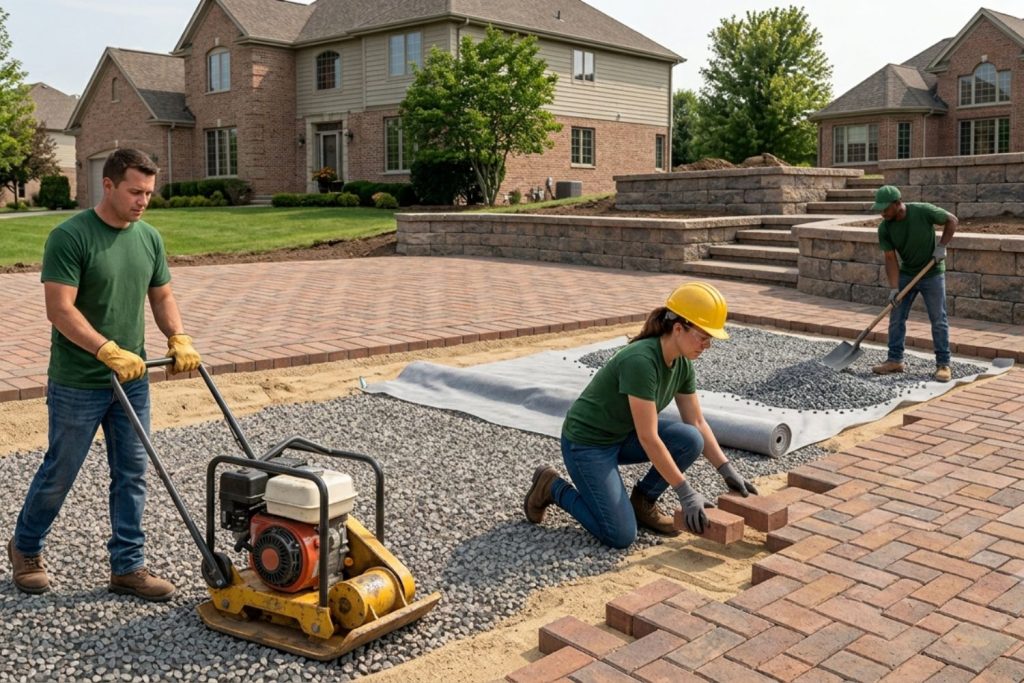
Every hardscape project we run follows ICPI-aligned methods for sub-base depth, bedding sand consistency, and edge restraint — the same standards used across commercial and municipal paving work, not just residential jobs.
Brick and concrete paver patios, driveways, walkways, retaining walls, and full outdoor living spaces, for residential landscaping services and commercial landscaping services clients throughout Chicagoland. Every project starts with a soil and drainage walk-through before we design the base.
A hardscape built for the long haul instead of a good-looking install that fades fast. Fewer callbacks, real warranty coverage, and a surface that survives Illinois winters without heaving. You also get a straight answer up front — clear scope, honest timeline, and a crew that flags drainage issues before they become a five-figure repair.
A Word on Standards
Paver systems installed without regard for ICPI specifications fail early, full stop. Sub-base compaction density, geotextile use over soft soil, joint sand gradation, edge restraint anchoring — these details are the entire difference between a patio that lasts five years and one that lasts twenty. That’s not marketing language. It’s why commercial properties in particular should care who’s actually doing the installation.
Lock In Your Slot Before the Season Closes
Late summer is peak construction season across Chicagoland, and hardscape crews book solid fast once fall scheduling opens up. If you’re planning a paver patio, driveway, or retaining wall, now’s the window to get on the calendar. Request a free on-site quote from Green Day Pro Landscaping and reserve one of our remaining late-summer construction slots before they’re gone.
The Bottom Line
Heavy hardscape work rewards precision and punishes shortcuts, every time. Choosing among landscaping contractors based on certification, transparency, and real adherence to base-preparation standards protects your investment far longer than choosing on price. Green Day Pro Landscaping builds hardscapes around ICPI-informed practices and years of hands-on experience with Chicagoland’s soil and weather — which is what actually keeps a patio flat and a driveway solid past year one. If you’re ready to move, we’re ready to walk your site and lock in your slot before the season runs out.
FAQs
Certified landscaping contractors follow documented base-preparation and compaction standards, like ICPI guidelines, instead of relying on general experience alone. That cuts down the risk of paver shifting, drainage failure, and cracking on heavy hardscape jobs.
Most residential patios take 3–7 days depending on square footage, soil, and drainage needs. Commercial projects vary more based on load requirements and site access — we’ll give you a real timeline after the site walk-through.
3. Why does soil type matter so much for hardscape work?
Chicagoland’s clay-heavy soil expands and contracts hard with moisture and freeze-thaw cycles. Landscaping contractors need to design around that with proper base depth and drainage, or pavers and walls will heave within a couple of seasons.
4. Can landscaping contractors fix a paver patio that's already failing?
Sometimes, but it depends on the cause. If the original problem was base compaction or drainage, a real fix usually means pulling up and reinstalling that section rather than a surface patch — something a good contractor will tell you upfront.
5. Do I need a permit for a driveway or retaining wall project?
A lot of Chicagoland municipalities require permits for taller retaining walls or driveways that affect drainage and the right-of-way. We handle permit coordination as part of the project so it doesn’t hold up your timeline.