


Late summer is when most Chicagoland homeowners start pricing out next year’s yard projects, and the first question is almost always the same: what will it actually cost? Residential landscaping services in Illinois vary widely because no two properties, soil conditions, or Chicago winters treat a project the same way. A flat, well-drained lot in Naperville and a heavy-clay backyard in Oak Park can carry very different price tags for the exact same patio design.
At Green Day Pro Landscaping, a family-run Chicagoland company with two decades of hands-on experience, we’ve priced thousands of jobs across the region. This guide breaks down real cost drivers, common budgeting mistakes, and what separates a fair estimate from a lowball quote that turns into a change-order nightmare mid-project.
Why This Topic Matters
Landscaping pricing confusion is one of the biggest friction points between Illinois homeowners and contractors. National averages get thrown around online, but they rarely account for Midwest freeze-thaw cycles, clay-heavy soil, or the labor rates specific to the Chicago metro.
Nationally, full landscaping projects tend to run between roughly $4.50 and $17 per square foot depending on scope. According to the HomeAdvisor Landscaping Cost Guide, national landscaping costs vary significantly depending on project scope, materials, and labor, with softscape work (lawn, plants, mulch) sitting on the lower end and hardscape features like patios
Understanding this matters because:
- Homeowners who budget off generic national numbers are frequently surprised by Illinois-specific quotes.
- Underestimating labor share (often 50–60% of a project) leads to scope cuts mid-build.
- Late summer is the ideal planning window before fall installation and spring scheduling fill up.
Key Considerations for Budgeting Residential Landscaping Services
A full-scale yard transformation isn’t priced as one line item. It’s a stack of separate cost categories that need to be estimated individually before they’re combined into a total.
Practical Applications
For a typical Chicagoland property, a full-scale project usually blends several of these elements:
- Softscape (lawn, planting beds, trees, mulch): Generally the most affordable per square foot, though mature tree installation and specialty plantings raise costs quickly.
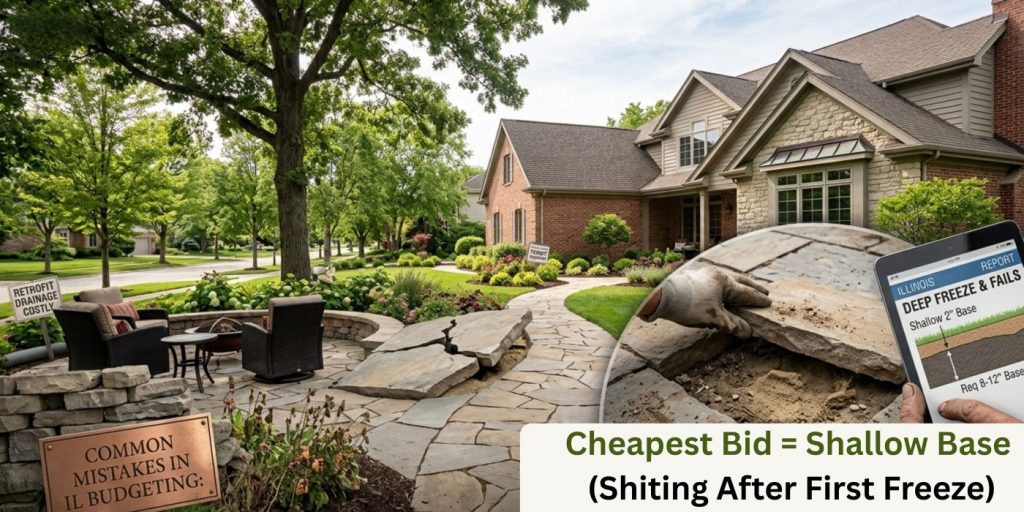
- Hardscape (patios, walkways, retaining walls): The single biggest swing factor. Brick paver patios, in particular, require proper base excavation and compaction to survive Illinois freeze-thaw cycles — skipping this step is the most common source of cracked or heaving pavers within two years.
- Grading and drainage: Often overlooked in early estimates, but essential on Chicagoland’s flatter lots and clay soils where standing water is a common complaint.
- Lighting and irrigation: Adds meaningful cost upfront but reduces long-term maintenance calls and plant loss.
- Design and 3D planning: A worthwhile investment on larger projects since it prevents costly mid-build redesigns.
Full residential landscaping services covering a complete yard renovation — grading, hardscape, softscape, and finishing touches — commonly land in the low five figures for an average Chicagoland lot, with smaller refresh projects starting well under that and large estate-style properties running significantly higher.
Common Mistakes or Challenges
The costliest budgeting errors we see from Illinois homeowners include:
- Treating material cost as the whole quote. Labor, equipment mobilization, base preparation, and disposal fees are frequently 50% or more of the total, especially on hardscape.
- Choosing the cheapest bid without checking base depth specs. A patio quoted well below market rate is almost always cutting excavation depth or base material — a decision that shows up as shifting pavers after the first freeze-thaw cycle.
- Ignoring drainage until it’s a problem. Retrofitting drainage after installation costs far more than designing it in from the start.
- Underestimating permit and municipality requirements. Several Chicagoland suburbs require permits for retaining walls over a certain height or major grading changes — a detail that catches DIY-adjacent homeowners off guard.
Best Solutions and Services for Illinois Homeowners
Getting an accurate number requires an experienced landscaping contractor who understands both design and Illinois-specific site conditions — not just a materials calculator.
Recommended Services
Green Day Pro Landscaping structures full-scale projects around a transparent, itemized process:
- On-site consultation and soil/drainage assessment
- 3D design visualization before any excavation begins
- Itemized proposal separating material cost from labor cost
- Phased project options so homeowners can budget in stages rather than committing to the full scope at once
This structure lets homeowners see exactly where their dollars are going instead of receiving a single bottom-line number they can’t evaluate.
Advantages of Working With an Established Local Contractor
- Regional expertise: Twenty years of building patios, walls, and planting beds that hold up through Illinois winters means fewer callbacks and warranty issues.
- Transparent estimating: Material vs. labor cost breakdowns prevent surprise change orders.
- Full-service scope: From residential landscaping to commercial landscaping services, one contractor can manage both hardscape and softscape phases without coordination gaps between subcontractors.
- Long-term relationship value: Ongoing seasonal maintenance keeps a completed project looking sharp for years, protecting the original investment.
Compliance, Standards, and Industry Practices
Reputable landscaping contractors follow established base-preparation and grading standards — such as those referenced by the Interlocking Concrete Pavement Institute for paver base depth and compaction — to ensure hardscape installations withstand freeze-thaw cycling rather than shifting within a season or two. Industry trade publications, including Landscape Management, regularly highlight labor cost trends and material pricing shifts that responsible contractors factor into their estimates rather than quoting off outdated national averages. Working with a contractor who can speak specifically to these standards — not just quote a price — is one of the clearest signs of real industry expertise.
Ready to Get an Accurate Quote for Your Property?
Generic online calculators can’t account for your soil, your drainage, or your specific vision. The only way to get a number you can actually budget around is a site walkthrough with a contractor who will show you the material and labor breakdown line by line.
Late summer is the ideal time to lock in a fall installation slot or reserve your place on the spring schedule before it fills up. Request a free, itemized quote from Green Day Pro Landscaping, or browse our residential landscaping services to see what’s included at each project tier. If you’re managing a commercial property, our team also handles commercial landscaping services across the Chicagoland area.
Conclusion
Full-scale residential landscaping services in Illinois don’t fit neatly into a single national average — soil conditions, freeze-thaw resilience, and Chicagoland labor rates all shift the final number. What matters most isn’t chasing the lowest bid, but understanding exactly what’s included in it. A transparent, itemized estimate from an experienced local contractor is the only reliable way to budget a project that will actually hold up through Illinois winters and deliver lasting value. Green Day Pro Landscaping has spent twenty years helping Chicagoland homeowners plan projects that match both their vision and their budget — and late summer is the right time to start that conversation.
FAQs
1. How much do residential landscaping services typically cost in Illinois?
Full-scale residential landscaping services in Chicagoland generally range from a few thousand dollars for a targeted refresh to low five figures or more for a complete yard renovation, depending on hardscape scope, soil conditions, and property size. An on-site consultation gives the most accurate number.
2. What's the difference between material costs and labor costs in a landscaping quote?
Materials cover pavers, plants, soil, and hardware, while labor covers excavation, base compaction, grading, and installation. Labor typically makes up 50% or more of a project’s total, which is why itemized residential landscaping services quotes are more trustworthy than flat lump-sum pricing.
3. Why do landscaping costs vary so much between contractors?
Pricing gaps usually come down to base preparation depth, material grade, and whether drainage and permitting are included upfront. A significantly cheaper bid often means shortcuts that surface as cracking or shifting after Illinois’s freeze-thaw cycles.
4. Is it cheaper to phase a landscaping project instead of doing it all at once?
Phasing can help spread out cost, but it works best when a landscaping contractor designs the full plan upfront so drainage, grading, and hardscape connect properly between phases rather than requiring rework later.
5. When is the best time to book residential landscaping services in Illinois?
Late summer and early fall are ideal for locking in installation slots before winter and securing early spots on the following spring’s schedule, since Chicagoland landscaping contractors book up quickly during peak season.